Infant and Pediatric Feeding in Lafayette
The feed takes an hour, ends with both of you in tears, and starts again in ninety minutes. You have already been told this is normal. A feeding evaluation looks at the latch, the suck and the swallow and tells you what is actually happening in there.
What is infant and pediatric feeding therapy?
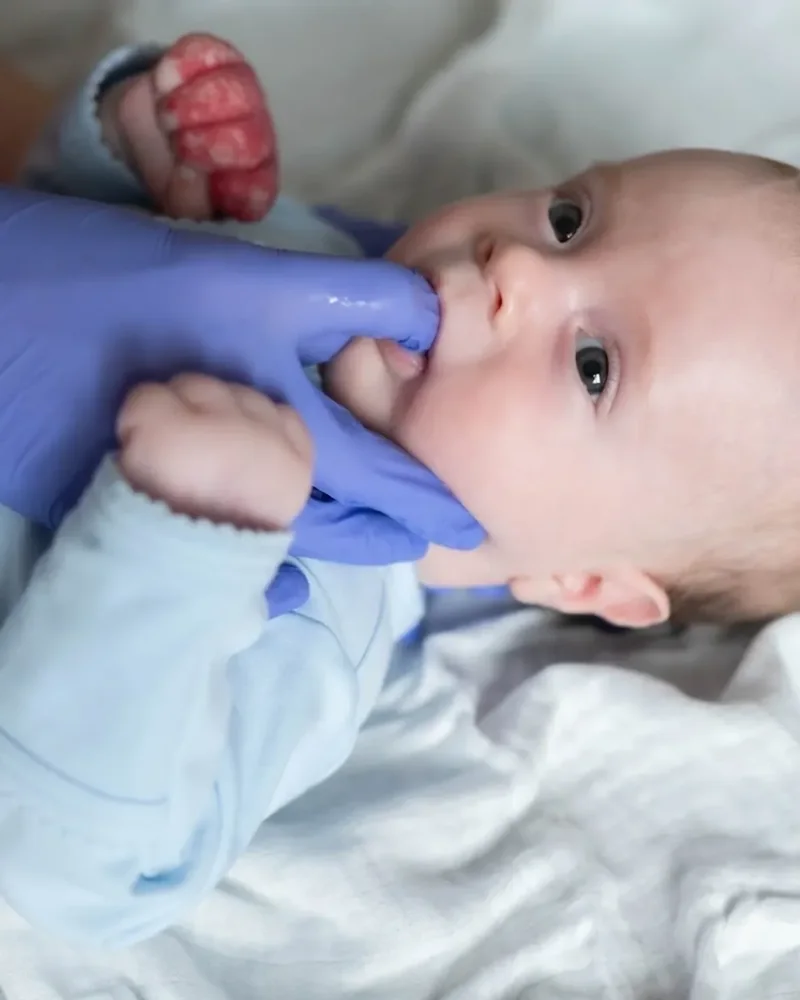
Feeding therapy is the work of finding out why eating is hard, and then making it easier. Not by pushing more food, and not by waiting it out. Your therapist watches an actual feed, looks inside the mouth, and follows the mechanics: how the tongue lifts and cups, whether the lips seal, how the suck and the swallow and the breath take turns, what the jaw does with a piece of toast. Everything else follows from that. A baby who clicks at the breast, loses the latch and feeds for an hour is telling you something specific. A toddler whose safe list has quietly shrunk to five foods is telling you something too. Both of those are worth a real answer instead of another reassurance that she will grow out of it.
The work covers latch and bottle feeding, tethered oral tissues and tongue tie, the move to solids and baby led weaning, food aversion and extreme picky eating, and the safety of chewing and swallowing. Sessions are one on one, and you are in the room the whole time, coached alongside your child, because the feeds that matter are the ones happening at 2am and at your own dinner table. You leave knowing what to change about the position, the flow, the spoon or the routine, and what to watch for before the next visit.
Who it is for.
Feeding therapy is not only for babies who are losing weight. If feeds hurt, if meals have turned into a negotiation you both lose, if you are quietly dreading the next one, that is reason enough to come in. These are the families who find us.
The newborn who cannot get the latch
Clicking, sliding off, feeding forever and waking hungry, and nipple damage that has you dreading the next one. We look at the tongue, the lips and the suck pattern, adjust the position and the flow, and give you something to change tonight rather than a plan for next month.
The baby who stalled at solids
Purees went fine and then texture arrived and everything stopped. Gagging, packing food in the cheek, spitting it back out, or refusing the spoon altogether. We build the chewing and the tongue movement that texture actually requires, in the order a mouth learns them.
The child whose safe list keeps shrinking
It was twenty foods, then twelve, and now it is beige and crunchy or nothing. This is rarely stubbornness. We work out what is driving the refusal, then widen the list one honest step at a time, without bribes and without a standoff at the table.
What to expect.
Bring the bottle, the cup, the spoon or the snack you actually use at home. We would rather see the real thing than hear about it. Here is how the visits run.
Pinpoint: the evaluation
We take your history, then watch a feed or a snack exactly as it happens at home. Your therapist looks inside the mouth at the tongue, the lips and the palate, checks how the jaw and tongue move, and separates what is a skill problem from what is a structure problem from what has become a fear of the table. You get the findings in plain language the same visit.
Prime: building the mechanism
Then we build what is missing. For a newborn that might be tongue movement, a better seal and a position that lets the suck, swallow and breath take turns properly. For an older child it might be chewing on the molar surface, moving food across the tongue, or tolerating a texture that has been off limits for a year. You practise it with your therapist so it comes home with you.
Perform and Prevent: at your own table
A skill that only shows up in the clinic has not landed yet. So we take it to the real feed, the real high chair, the real family dinner, and we sort out the routine around it: seating, timing, what gets served with what, how you respond when a food comes back out. As meals hold together, visits spread out and you carry it from there.
A tongue tie release is a medical procedure, and it is performed by a provider such as a dentist, an ENT or a physician. We do not perform it. What we do is the assessment that works out whether restriction is genuinely the problem, the preparation beforehand, and the functional work afterwards so the tongue learns to use the movement it has been given. Plenty of babies we see never need a release at all.
Sarah Tate at Hope Therapy changed everything for us! My newborn was miserable and no one was sleeping.
Where to go next.

Infant Feeding & Tongue Tie
Painful latch, clicking, endless feeds. What we check in the mouth and what the findings mean.

Feeding & Food Aversions
When the safe list keeps shrinking and every meal becomes a negotiation you both lose.
Speech Therapy
Sounds, language, fluency and literacy. Our other service, and often the same mouth a year later.