Speech, Fluency and Language Support in Lafayette
You are not imagining it. You have watched other children at the park and done the arithmetic in your head. Everyone told you to wait. Waiting is not a plan.
What causes speech and language delays?
There is rarely one reason a child is late to talk or hard to understand. Speech is a motor skill, language is a thinking skill, and fluency is the timing that carries both. A delay in any one of them looks different at the kitchen table, and each one needs a different plan. The point of an evaluation is to find out which one you are actually looking at.
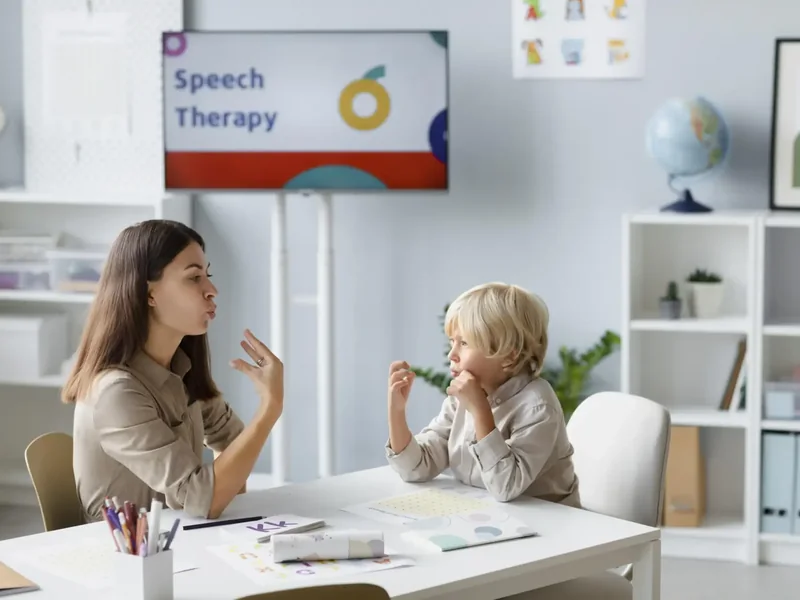
Some children understand everything you say and still have very few words of their own. They point, they lead you by the hand, they hand you the cup instead of naming it. Communication is happening, so the delay is easy to explain away. What matters is the gap between what a child understands and what a child can produce, and whether new words are arriving steadily or the list has been stuck at the same twenty for months. That gap is measurable, and it is the first thing we look at.
Every child mispronounces words on the way to getting them right. Wawa for water, tar for car, nana for banana. The trouble starts when a sound pattern stays well past the age most children have dropped it, or when so many sounds are affected that a stranger cannot follow a whole sentence. Family members stop noticing because they have quietly learned the code.
Talking is one of the most complicated motor tasks a small body performs. Lips, tongue, jaw and breath have to arrive in the right order, dozens of times a second. When the tongue does not move independently of the jaw, or when a restriction limits where the tongue can reach, certain sounds stay out of range no matter how many times a child is corrected. This is why repetition alone sometimes goes nowhere. The mechanism underneath the sound has to be built before the sound will hold.
A child cannot copy a sound clearly if it never arrived clearly. Repeated ear infections, fluid behind the eardrum, or a stretch of muffled hearing during the months a child is mapping sounds can leave gaps that persist long after the ears are clear. The same is true when hearing tests normal but the brain has trouble separating speech from background noise. We ask about ear history early, because the answer changes what we work on and in what order.
Many two and three year olds repeat whole words while their language races ahead of their planning, and that kind of stumbling usually passes. What is worth attention is a child who repeats single sounds, stretches them out, blocks with visible effort, or begins avoiding certain words and topics altogether. Tension in the face, a lost thread mid sentence, or a child who says never mind and walks away all matter more than the raw number of repetitions.
A child can pronounce every sound correctly and still struggle to use language. Following two step directions, retelling what happened at school, staying on topic, asking a question and waiting for the answer are all separate skills. When they are shaky, the difficulty often gets read as attention or behavior rather than language. Classroom demands rise every year, so a gap that looked small at four can look much larger at seven. Naming it correctly is what makes it treatable.
How speech therapy in Lafayette helps.
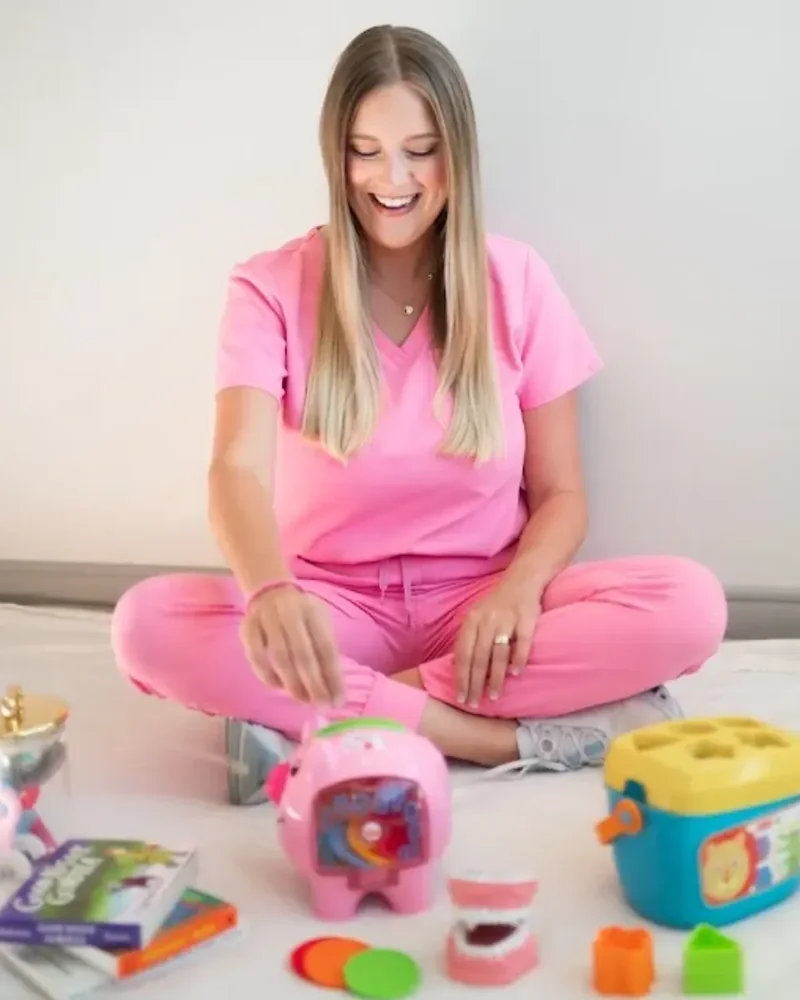
Wait and see is the most common advice parents get, and it is the only plan with no steps in it. Here is what a plan looks like instead. Your therapist starts by separating the pieces: what your child understands, what your child can produce, how the mouth is moving, and how the sounds land for a listener. Then the work is built in the order the skill develops, not by drilling whichever sound bothers everyone most. Sessions are one on one and you are in the room. That is deliberate. The words your child needs first are the ones used at your table and with your family, so you learn the cues and the corrections as we do. You do not need a referral to book an evaluation, though some insurance plans require one before they will pay, and we check that when we verify your benefits. At the evaluation we give you an honest estimate of how long this is likely to take. Not a promise, an estimate.
What to expect.
Pinpoint
The first visit is an evaluation, not a lesson. We listen to how your child talks and plays, measure what is understood against what can be produced, look at how the mouth is moving, and ask about ear history and early feeding. You leave with a plain language explanation of what is driving the delay and an honest estimate of the timeline.
Prime
Then we build the foundation the skill sits on. Depending on what we found, that means oral muscles that move independently, a mouth that rests in the right position, an ear that can sort one sound from another, or the sentence structures that carry longer ideas. This is the unglamorous part, and it is the part that makes the rest hold.
Perform
Last, the skill moves out of the therapy room. We practice it in conversation, at the table, and in the situations your family finds hardest, then hand you the specific cues to use at home. The goal is a child who is understood by people who do not already know the code, and a plan that keeps working after discharge.
What often shows up alongside it.

Fluency Disorder (Stuttering)
Repetitions, stretched sounds and blocks that come with visible effort. Timing tells us whether to watch or to work.

Children's Auditory Processing
Hearing tests normal, but speech gets lost in a noisy room. We look at how sounds are sorted, not just whether they arrive.
Dyslexia Support
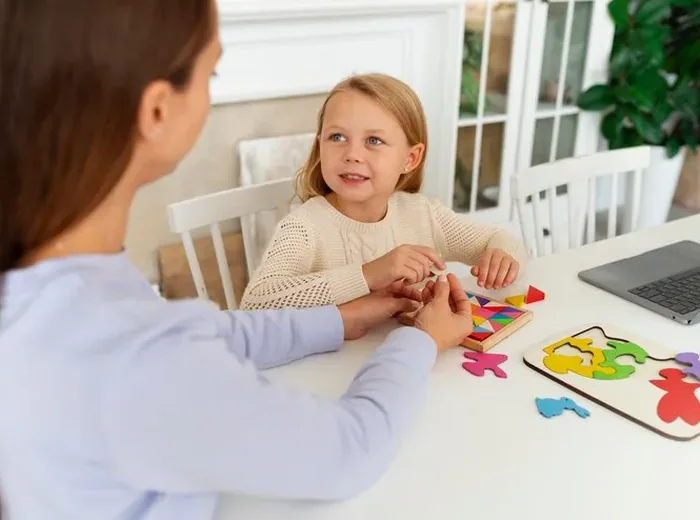
When sounds and letters will not line up on the page. Reading trouble often begins in spoken language.