Speech and Feeding Concerns We Treat in Lafayette
Eight things, and eight is the honest number. A tongue that cannot lift far enough to feed. A three year old whose sentences arrive as one long blur. A dinner table that has become a standoff. A jaw that clicks. A reader who is bright everywhere except the page. Whatever sent you looking tonight, the first step is the same: an evaluation that finds what is actually driving it rather than naming the thing you can already see. Find the one that sounds like your child, and read what the work involves before you book anything.
Find the one that sounds like your child.
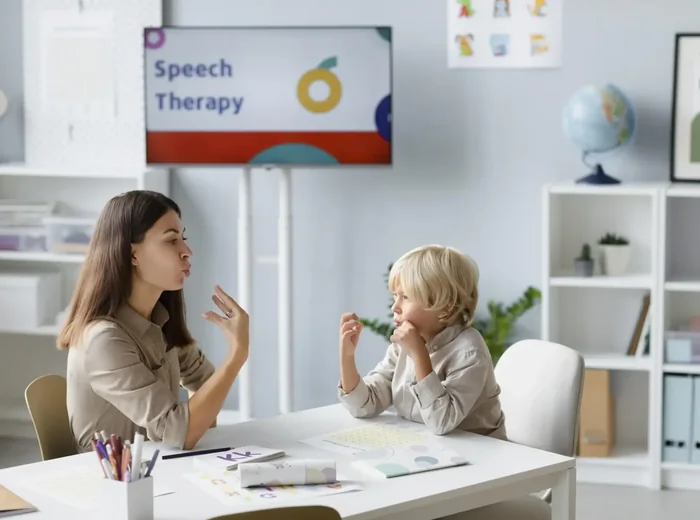
Speech, Fluency & Language
Late talking, unclear speech, or sentences that will not come together. We find the gap and close it.

Infant Feeding & Tongue Tie
Painful latch, clicking, endless feeds. We assess the mouth and the feed before anyone talks about a release.

Feeding & Food Aversions
When the safe list keeps shrinking and every meal becomes a negotiation you both lose.

Orofacial Myofunctional Therapy
Mouth breathing, tongue thrust, thumb habits: retraining the muscles that shape the face.

TMJ Disorders
A jaw that clicks, locks, aches, or wakes them up clenching. We treat the muscles driving it.

Fluency Disorder (Stuttering)
Repetitions, blocks and the frustration that comes with them. Fluency work that protects confidence.

Children's Auditory Processing
Hearing is fine, listening is not. Directions get lost, noisy rooms take over, reading stalls.

Dyslexia Support
Structured, sound-based literacy work for the child who is bright everywhere except the page.

The label matters less than what is driving it.
Two children can arrive with the same word written on a referral and need completely different work. One three year old is hard to understand because a handful of sounds simply have not developed yet. Another is hard to understand because the tongue cannot get where it needs to go, which is also why the bottle was a battle at eight weeks and why his mouth hangs open at night. Same complaint at the front desk, different mechanism, different plan. So every case starts with an evaluation rather than a protocol: the history, a look inside the mouth where that is relevant, and a real conversation about what your day actually looks like. Then you get plain language about what we found, an honest estimate of the work, and the choice of what to do next. If what we find is not ours to treat, we will tell you that too.