Fluency Disorder and Stuttering in Lafayette
Everyone told you to wait and see. Some children do outgrow it. Some do not, and the ones who do not are the reason waiting is not a plan. An evaluation tells you which conversation you are having.
What causes stuttering?
You are not imagining it. You have listened to other four year olds at the park and done the arithmetic in your head. Stuttering is not caused by nerves, by bad parenting, or by anything that happened at your dinner table. It is a difference in how the brain times and coordinates speech, and it tends to run in families. Here is what actually sits behind it, and what makes it louder.

Fluent speech asks the brain to plan a sequence and the muscles of the breath, voice and mouth to carry it out in a fraction of a second. In children who stutter, that timing system is less stable. The result is a repetition, a stretched sound, or a block where the word is ready but the sound will not launch. This is a difference in timing, not a shortage of intelligence, effort or confidence.
Stuttering runs in families more often than most parents realise. If a parent, grandparent, aunt or sibling stuttered, the chance a child does too goes up, and so does the chance it persists past the preschool years. Family history is one of the first things we ask about, because it is one of the strongest signals we have about whether waiting is reasonable or whether it is time to start. It is not a verdict. It is information that changes the recommendation.
Many children start stuttering between two and five, right as sentences get longer and vocabulary explodes. The ideas arrive faster than the motor system can carry them, and the seams show. For a lot of children this settles on its own within a year. For others it does not, and the difference is not something you can hear by listening for a week. That is what the evaluation is for: sorting the pattern likely to resolve from the pattern that needs help now.
A busy household does not cause stuttering, but it makes it louder. Fast talking around a child, questions stacked on questions, competing for a turn at the table, or being finished by a helpful sibling all raise the demand at exactly the wrong moment. These are not blame points. They are levers. Slowing the pace of the room, adding a beat before you answer, and letting a child finish are changes a family can make in a week, and they often show up in the speech before anything else does.
The reaction to a stutter becomes part of the stutter. If a block gets a look, a rush, or a well meant finish the word, a child starts to avoid. Avoidance turns into swapped words, dropped sentences, and a hand over the mouth. Secondary behaviours like eye blinking, head jerks and breath holding grow out of the effort to push through. Much of therapy is spent undoing this layer, because it is the layer that decides whether stuttering stays small or takes over the day.
There is a real difference between an easy repetition and a hard one. Easy stuttering bounces along and the child carries on. Hard stuttering locks, with the jaw fixed, the breath stopped and the face tight. Struggle and tension are among the clearest signs that a child is working against his own speech rather than through it, and they are a reason to start rather than wait. Therapy teaches an easier way through the moment before the struggle becomes the habit.
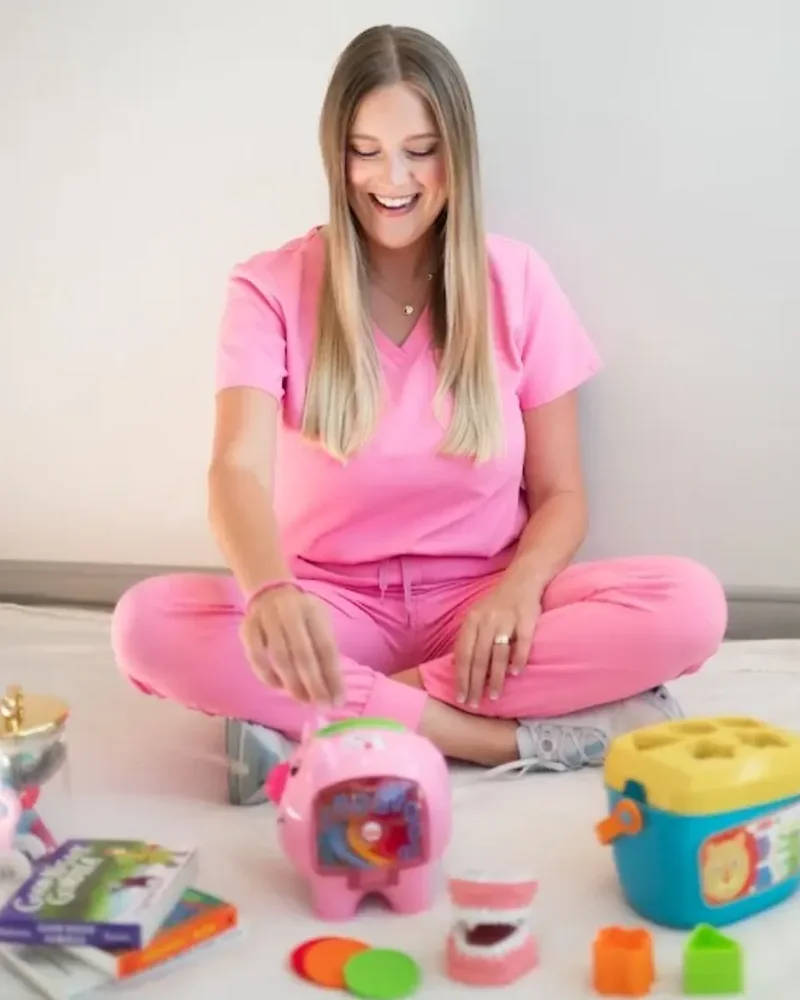
How speech therapy in Lafayette helps.
Here is what therapy actually is, because the picture in most parents' heads is wrong. We are not drilling your child to say words correctly. Fluency work has two halves and they run together. The first half is the speech itself: easier onsets, gentle starts, a rate your child owns rather than one imposed on him, and lighter contact through the sounds that lock. Those are trainable skills, practised first in single words, then sentences, then real conversation where it counts. The second half is what your child believes about his own talking. A child who is not afraid of a stutter stutters less, says more, and stops trading the word he wants for the word he can get out. So we talk about it openly, we make it ordinary, and we build a child who can order his own food. You are in the room, you get the specific things to change at home, and you get an honest estimate of the timeline at the evaluation rather than a number that sounds reassuring now.
What to expect.
Pinpoint
The evaluation is where the guessing stops. We listen to real conversation rather than a word list, describe exactly what is happening and how often, ask about family history and how long it has been going on, and look at how your child feels about his own talking. You leave with a clear picture, a recommendation, and an honest timeline instead of a reassurance.
Prime
Then we build the skills somewhere your child can succeed. Easier starts, a speaking rate he controls rather than one imposed on him, and lighter contact through the sounds that lock, practised first where the pressure is low. Alongside that we work on how he feels about speaking. You get the small set of changes that matter at home, and we tell you which well meant habits to drop.
Perform
Last, the skills have to hold in the places that count: the classroom, the phone, the drive through window, the moment a teacher asks a question in front of everyone. We practise there on purpose. Before discharge you leave with a home plan and a short list of what to watch for, so one hard week does not undo a good year.
Speech rarely travels alone.
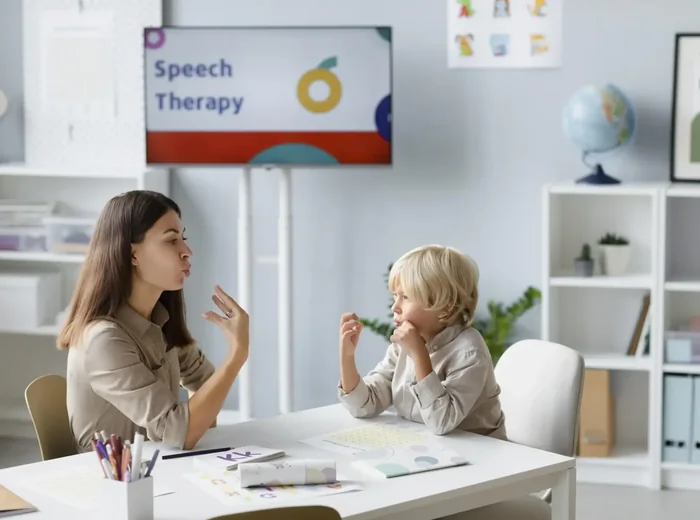
Speech, Fluency & Language Support
Late talkers, unclear speech, and children who understand far more than they can say.

Children's Auditory Processing
Hearing is fine, but the words get lost in a noisy room. Listening and language support.
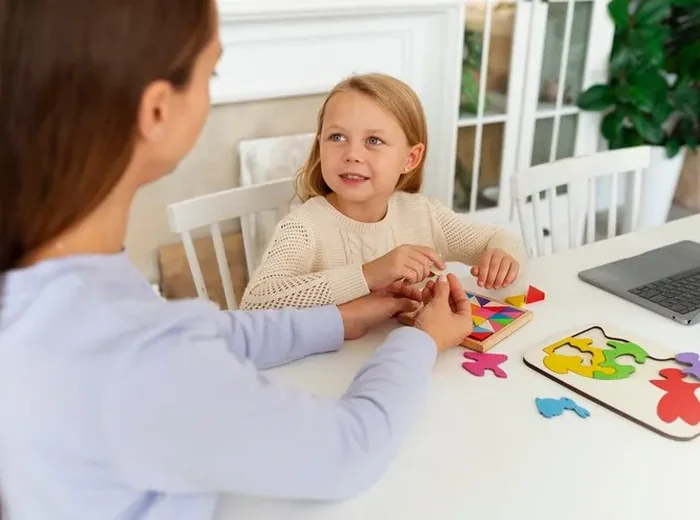
Dyslexia Support
Structured literacy for the child who reads a word on one line and not the next.