TMJ Disorders in Lafayette
The clicking at the dinner table. The grinding you can hear down the hall. You were told she would grow out of it. Jaw muscles do not outgrow a habit, but they can be retrained.
What causes TMJ disorders?
You are not imagining the clicking. You hear it across the dinner table. Maybe she rubs her jaw before school, maybe he wakes with a headache at the temples, maybe the grinding carries down the hall at night. A jaw that hurts in childhood is rarely a mystery of the joint itself. It is usually a muscle story: where the tongue rests, how the mouth closes, and what the face does all day without anyone noticing.

The tongue is meant to rest lightly on the roof of the mouth, all day, without anyone thinking about it. When it sits low in the floor of the mouth instead, the jaw loses its quiet reference point and the muscles that close and steady it never fully switch off. A small amount of extra work, held all day, adds up to soreness at the joint and fatigue through the cheeks. Resting posture is one of the first things we look at, because it is usually the thing everything else is built on.
A child who breathes through the mouth has to hold the jaw open to do it. That drops the tongue, changes how the head sits on the neck, and asks the jaw muscles to hold a position for hours that they were never designed to hold. Allergies, enlarged tonsils and adenoids, and long stretches of congestion all push a child into this pattern, and it often persists after the original blockage is gone.
Grinding and clenching load the jaw joint and its muscles far beyond what ordinary chewing asks. Parents usually hear it at night, or hear about it from a dentist who has found flattened edges on the back teeth. Stress plays a part, but so does an oral system with nowhere comfortable to rest. When the tongue has no home position and the lips do not seal, the jaw becomes the default place a child stores tension. Retraining rest and seal gives that tension somewhere else to go.
Sustained sucking habits shape a growing mouth. Held past the toddler years, a thumb or a pacifier can narrow the palate, tip the front teeth forward, and teach the tongue and jaw a pattern that outlives the habit. The result is a bite that does not close evenly and jaw muscles working around the mismatch at every meal. Habit elimination is a real part of myofunctional therapy, and it works far better as a planned programme with the child on board than as a nightly argument.
When the tissue under the tongue is short or tight, the tongue cannot lift to the palate and stay there. Everything downstream adapts. The jaw helps out during swallowing, the lips strain to seal, and the muscles of the face take on jobs that were never theirs. We assess how the tongue moves and functions, not just how it looks. If a release is worth discussing, that conversation belongs with your dentist or physician, and the therapy around a release is what makes the change hold.
Jaws like symmetry and they like work. A child who chews on one side because the other aches, or who lives on soft food and swallows early, gives one set of muscles all the load and lets the other go quiet. Over months that asymmetry shows up as clicking, as the jaw drifting to one side when the mouth opens, and as aching after a long meal. Chewing patterns are trainable, and they are satisfying to change because families notice the difference at the table.
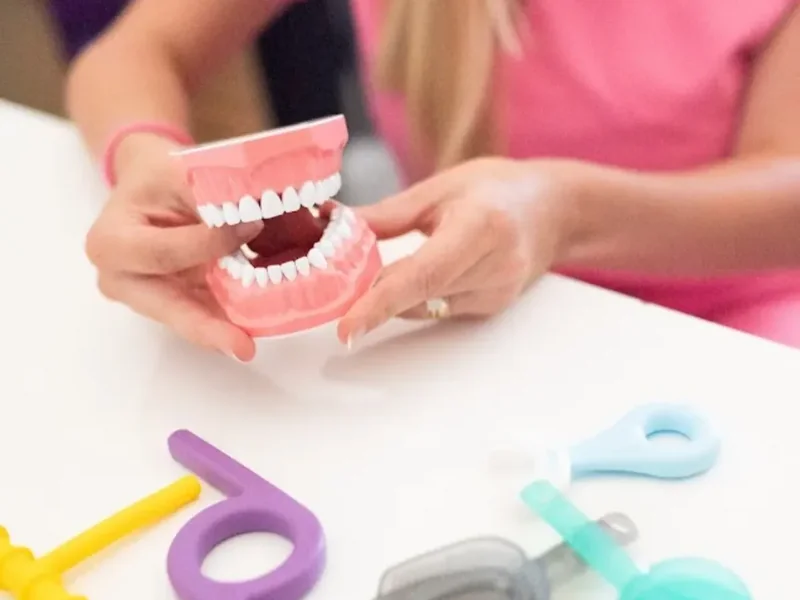
How myofunctional therapy in Lafayette helps.
Here is the part that usually gets skipped: nothing in a jaw works alone. We treat TMJ through the orofacial myofunctional route, which means the muscles of the tongue, lips, cheeks and jaw, and the habits those muscles have settled into. We do not manipulate the joint and we are not a dental practice. We retrain a system. The evaluation looks at resting posture, lip seal, breathing pattern, how your child swallows and chews, and where the jaw travels when it opens. From there the plan is short daily exercises, done at home, specific enough to be worth the few minutes they take, and habits get a real elimination plan rather than a scolding. Sessions are one on one and you are in the room. If your child needs a dentist, an orthodontist or a physician in the picture, we say so and we coordinate.
What to expect.
Pinpoint
The first visit is an evaluation, not a treatment session. We watch your child breathe, rest, swallow and chew, we look at the jaw through its full opening, and we ask you what the day and the night actually look like at home. You leave knowing what is driving the jaw pain, what sits outside what we treat, and what a realistic timeline looks like.
Prime
Then we build the mechanism underneath. Tongue to the palate, lips sealed, breathing through the nose, jaw quiet at rest. These are small exercises done in short daily sets, and they are the least glamorous and most important part of the whole plan. We teach them to you as well as to your child, because the repetitions that matter happen at home between visits.
Perform
Last, the new pattern has to survive a real meal, a full school day and a night of sleep. We move the work off the exercise sheet and into chewing, drinking, talking and resting. Before discharge you leave with a home programme and a short list of things to watch for, so the pattern holds after the visits end.
Jaws rarely work alone.
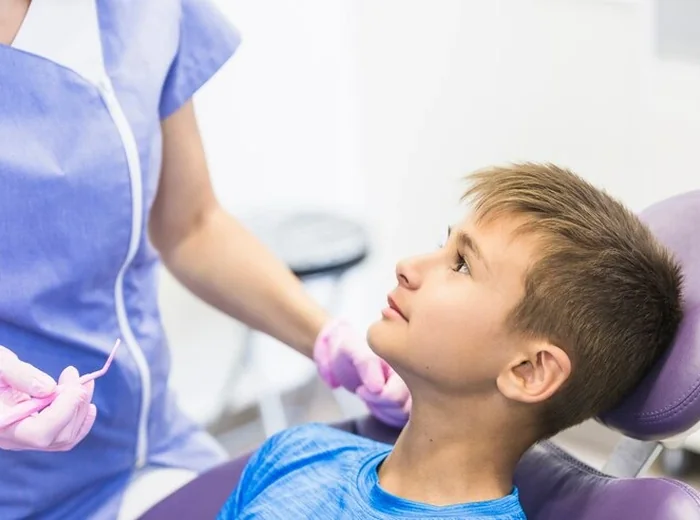
Orofacial Myofunctional Therapy
The tongue, lips, cheeks and jaw, retrained as one system. This is the route we take to a sore jaw.
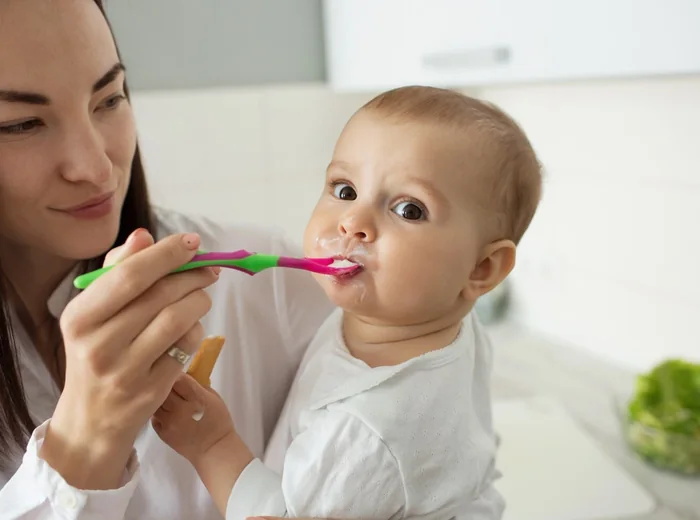
Infant Feeding & Tongue Tie
When the tongue cannot lift to the palate, feeding and jaw function both pay for it. We assess how it moves.
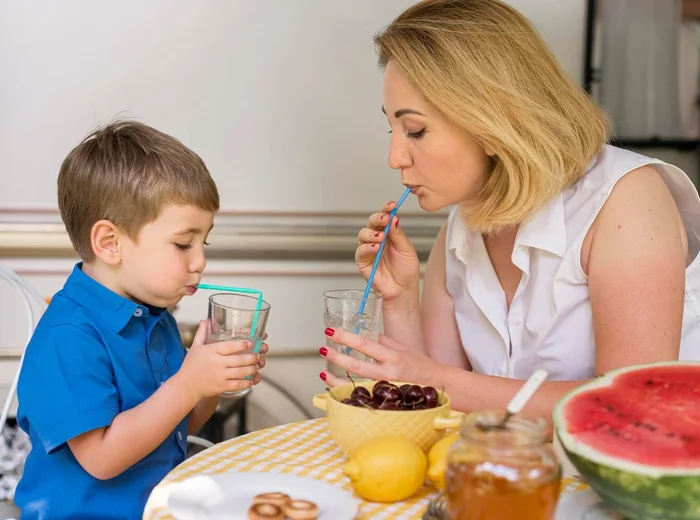
Feeding & Food Aversions
Chewing on one side or living on soft food often starts as avoidance. Mealtimes can change.